Physical Address
304 North Cardinal St.
Dorchester Center, MA 02124
Physical Address
304 North Cardinal St.
Dorchester Center, MA 02124



This is a question almost every homeowner asks after wiping the shelves on Monday and seeing a fresh gray layer by Wednesday. It feels unfair, especially when you clean regularly. The truth is that dust is not just dirt from outside. It is a mixture of fabric fibers, dead skin cells, pet dander, pollen, soil particles, and tiny bits of cooking residue, and your home is constantly producing and attracting it.
In this guide, you will learn the real reasons dust builds up so quickly, how to find the source in your own home, and the practical steps that cut dust down for good.
Before fixing the problem, it helps to know what you are fighting. Household dust is a mix of many tiny materials that float in the air and settle on every surface. The most common ingredients include:
Because most of these come from inside the house, simply opening a window or wiping a table will never answer the question of why is my house so dusty on its own.
If you keep asking yourself why my house is dusty, the answer is usually a combination of the factors below. Check each one against your own home.
Your heating and cooling system pulls air through a filter and pushes it back into every room. A clogged or cheap filter cannot trap fine particles, so dust simply circulates again and again. Replacing the filter regularly is one of the fastest ways to see an improvement.
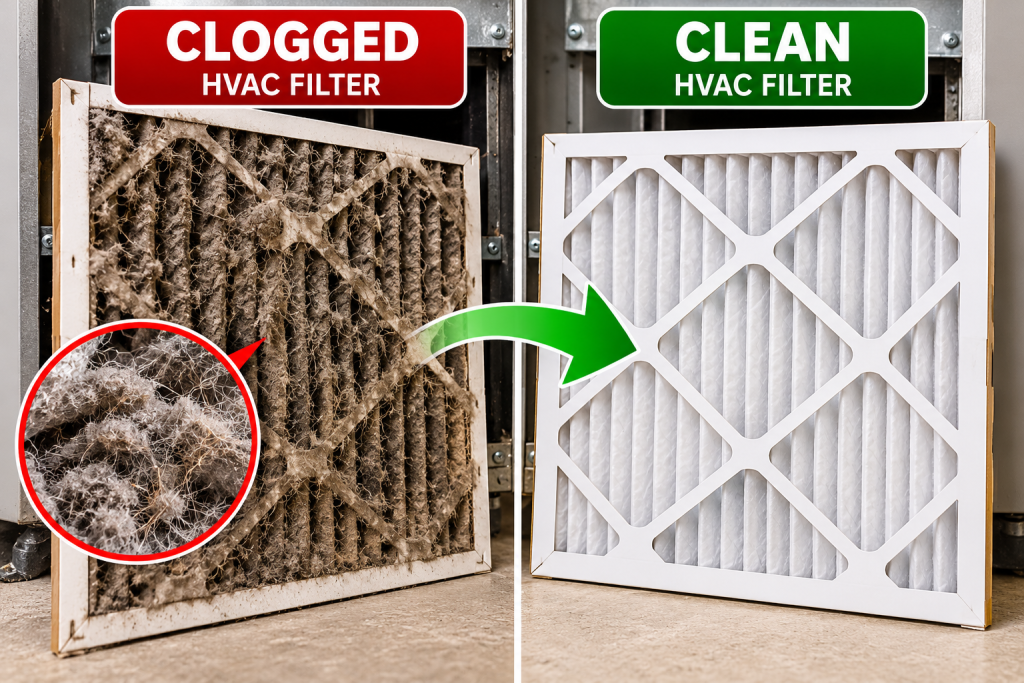
Over time, dust collects inside ductwork. Every time the system turns on, it blows some of that buildup out through the vents. If you notice dust gathering right below the vents, your ducts may need attention.
Carpets, sofas, curtains, and cushions act like sponges for dust. They trap particles when they are still and release them into the air when you walk, sit, or vacuum with a weak machine. Read also a detailed guide about how to clean a fabric couch
Pets shed hair and dander daily, and open windows invite pollen, soil, and traffic dust inside. Homes near construction sites, busy roads, or fields often notice a much heavier dust layer.
Every decorative object, book stack, and pile of paper gives dust another place to land. The more surfaces you have, the more you need to clean.
Very dry air makes fibers and particles easier to lift into the air, while very humid air encourages dust mites. Aim for a comfortable indoor humidity of roughly 30 to 50 percent.
Feather dusters and dry cloths mostly push dust around instead of removing it. Vacuum cleaners without good filtration can also blow fine dust back out through the exhaust.
Instead of guessing why my house isn’t clean, do a quick investigation. Wipe one clean surface in each room, then check it again after two days and compare how much dust has landed. The room with the heaviest layer usually points to the main source. Also look at the following spots:
| Problem | Best Fix | How Often |
|---|---|---|
| Dirty air filter | Replace with a higher-quality filter | Every 1 to 3 months |
| Dust on surfaces | Wipe with a damp microfiber cloth | Once or twice a week |
| Dust in carpets | Vacuum with a HEPA filter | 2 to 3 times a week |
| Dust in bedding | Wash in hot water | Every week |
| Dust from outside | Use doormats and keep windows closed on windy days | Daily habit |
Once you understand the causes, these steps will make the biggest difference.
Start with ceiling corners, fans, and light fixtures, then move to shelves, tables, and finally the floor. Dust falls downward, so working from the top prevents you from cleaning the same area twice.
Microfiber traps dust instead of spreading it, and a slightly damp cloth works even better. Avoid feather dusters, which mostly send particles back into the air.
A vacuum with a sealed HEPA filter keeps fine particles inside the machine. Vacuum slowly so the suction has time to lift dust from deep in the fibers.
Bedding collects skin cells and mites, so wash sheets weekly in hot water. Wash or vacuum curtains every month or two.
Swap a basic filter for a pleated one with a higher rating that suits your system, and mark the replacement date on your calendar.
Use a humidifier in dry months and a dehumidifier in damp ones so indoor humidity stays in a comfortable middle range.
This is the most frustrating version of the problem. If you still wonder why is my house so dusty right after a deep clean, the cause is usually hidden. Dust stirred up during cleaning takes hours to settle again, so surfaces can look dirty the same day. Dirty ducts, an old filter, or a leaky window can also keep supplying new dust faster than you can remove it. Try cleaning in the morning, letting the dust settle, and then wiping surfaces a second time in the evening.
If you want another perspective, HVAC.com has an article titled why is my house so dusty: causes and solutions that looks at the problem from the heating and cooling side. Comparing a few guides is a smart way to find the fix that fits your home.
People who keep asking why is my house so dusty often repeat the same few mistakes:
The best long-term answer to why is my house so dusty is a set of small daily habits rather than one big cleaning day.
Winter heating dries the indoor air, which lets dust particles float more easily. Closed windows also trap dust inside, and your heating system circulates it constantly. A humidifier and a fresh filter usually help.
Most dust is produced inside the home from fabrics, skin cells, and pets. Gaps around doors, vents, and old windows can also let outside dust in.
Yes, a purifier with a true HEPA filter can capture fine airborne particles before they settle. It works best alongside regular cleaning, not as a replacement for it.
Wipe surfaces once or twice a week and vacuum carpets two or three times a week. Homes with pets or allergies may need more frequent cleaning.
Dust can trigger sneezing, itchy eyes, and a stuffy nose, especially for people with allergies or asthma. Keeping dust under control can make breathing easier at home.

Now you know the answer to why is my house so dusty, and the good news is that it is fixable. Dust comes from fabrics, people, pets, outdoor air, and your own heating and cooling system, so the solution is a mix of better filtration, smarter cleaning, humidity control, and less clutter. Start with the air filter and a damp microfiber cloth, build a simple weekly routine, and you will see a cleaner home within a few weeks.